



Most brands today are not struggling because they are inactive.
They are struggling because their efforts are not connected.
There is content being created, ads are running, websites are live, and leads are coming in. On the surface, everything looks active. But when you step back, growth feels inconsistent. Some things work, others don’t. Results fluctuate, and it becomes difficult to understand why.
Over time, this leads to a common but incorrect assumption that marketing is unpredictable.
In reality, what is unpredictable is disconnected marketing.
Because customers today do not follow a straight path. They move through multiple touchpoints, often over time, forming opinions before taking action. They discover your brand, revisit it, compare it, and evaluate it silently.
By the time they reach out, the decision is already partially made.
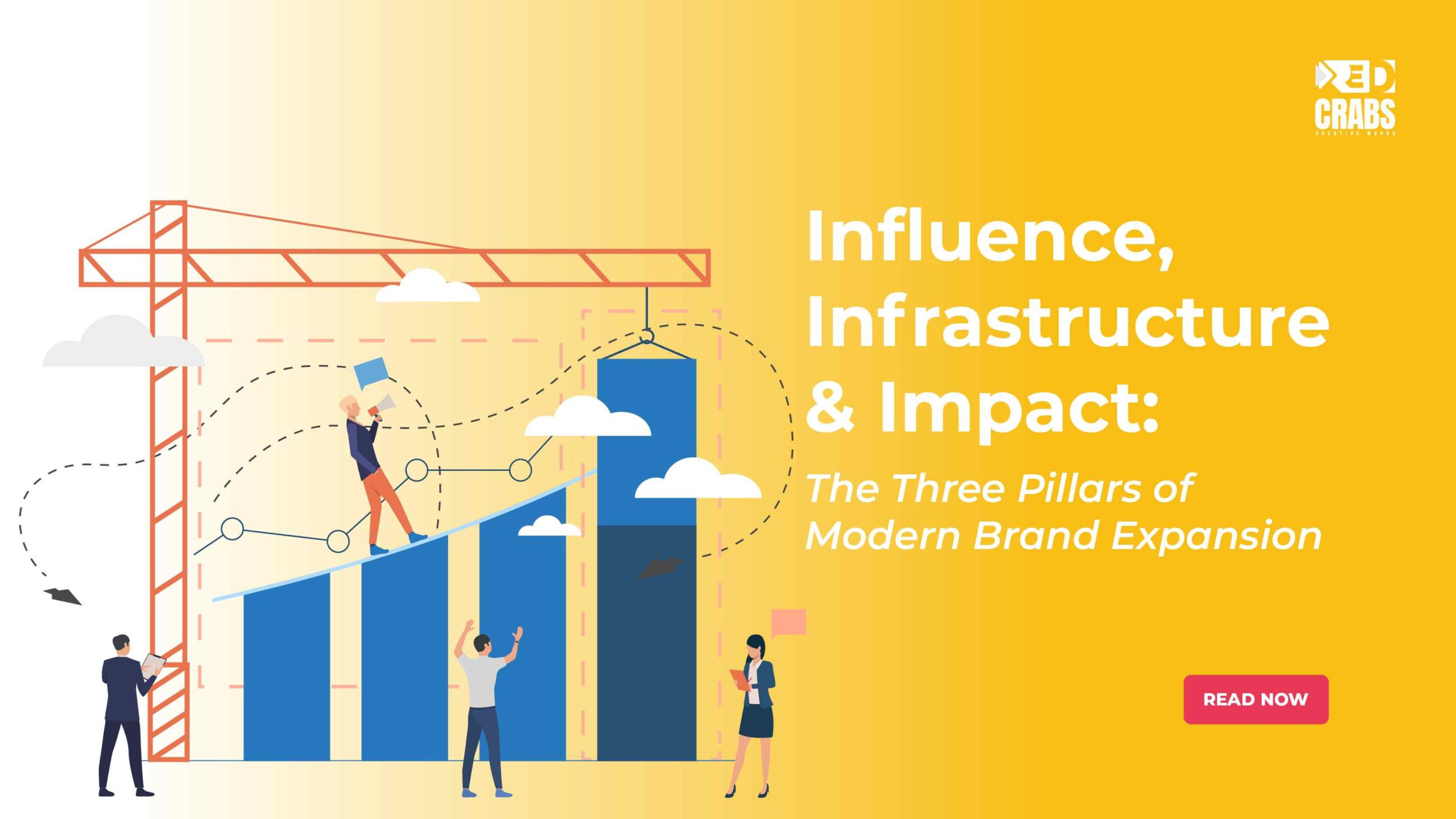
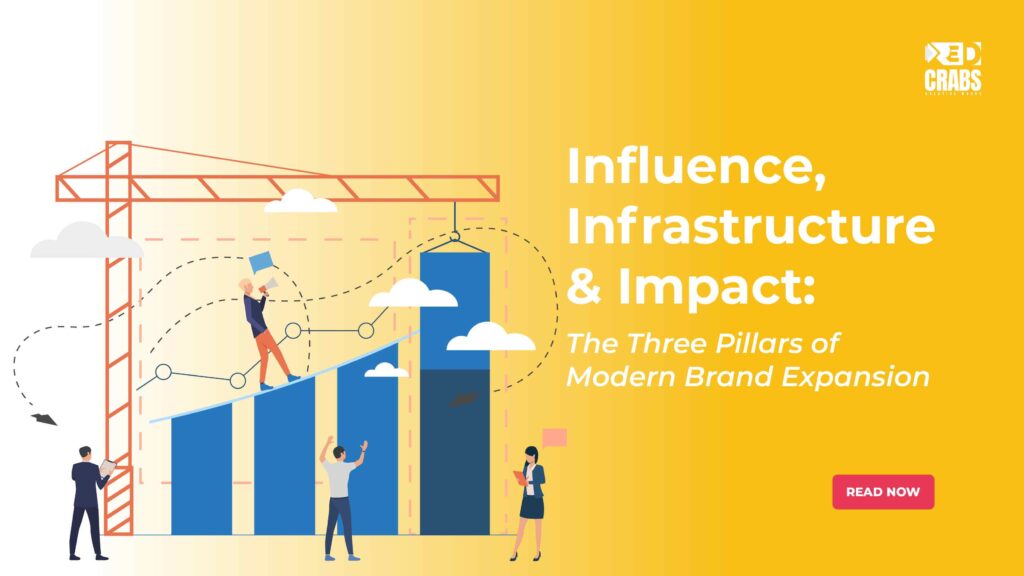
This entire journey is shaped by three core pillars:
Influence. Infrastructure. Impact.
When these are aligned, growth becomes structured. When they are not, growth feels random.
The Shift from Activity to Alignment
Marketing is no longer about doing more. It is about making everything work together.
Posting more content does not guarantee recall. Running more ads does not guarantee conversions. Increasing traffic does not guarantee growth.
What matters is how these elements connect.
Brands that grow consistently are not necessarily doing more. They are doing things in alignment. Their messaging, systems, and outcomes are connected.
This shift from activity to alignment is what defines modern brand expansion.
Influence: Building Recognition Before Conversion
Before someone chooses your brand, they need to recognize it. Recognition is built through repeated exposure that feels consistent and clear.
According to Google, more than 60 percent of consumers interact with a brand multiple times before making a decision (Google).
This means your brand is being evaluated long before any visible action happens.
Influence operates in this early stage. It shapes perception quietly over time.
Strong influence is not about being everywhere. It is about being remembered.
To build this effectively, brands need to focus on a few key elements:
- Clear positioning that can be understood instantly
- Consistent messaging across platforms
- Content that provides value or insight
- Repetition that builds familiarity
Many brand expansion strategies focus heavily on short-term engagement. While engagement is useful, it does not always translate into recall.
And without recall, conversion becomes harder.
In practice, this is where consistency plays a major role. When messaging, visuals, and tone are aligned across platforms, the brand becomes easier to recognize and trust.
Infrastructure: Turning Attention Into Action
Once a user notices your brand and decides to engage, the next phase begins.
This is where most brands lose momentum.
Getting attention is only the first step. What happens after that determines whether growth happens or not.
Infrastructure is the system that supports this transition from interest to action. It includes your website, landing pages, lead capture mechanisms, and the overall user journey.
According to Forrester, improving user experience can significantly increase conversion rates, sometimes by up to 200 percent (Forrester).
This highlights an important point. Growth is not just about attracting users. It is about guiding them effectively.
A strong digital brand growth framework ensures that every interaction leads somewhere meaningful.
Effective infrastructure includes:
- Clear messaging that immediately explains what you offer
- Logical flow that guides users step by step
- Focused landing pages built for specific actions
- Seamless processes that make it easy to convert
This is exactly why many businesses searching for a digital marketing agency in hyderabad feel like marketing is not working. It is not about more campaigns, it is about having the right system.
Without structure, attention does not convert. It simply drops off.
In execution, this is where the real difference is created. Small improvements in clarity and flow often lead to significant improvements in results.
Impact: Measuring What Actually Drives Growth
While influence builds perception and infrastructure supports action, impact is what determines whether your efforts are effective.
This is where many brands misinterpret success.
Metrics like impressions, likes, and clicks can indicate activity, but they do not always reflect growth.
According to McKinsey, companies that align marketing performance with revenue-based outcomes tend to grow faster than those that focus only on engagement metrics (McKinsey).
This means impact needs to be measured differently.
Instead of focusing only on visibility, brands need to look at:
- The quality of leads being generated
- Conversion rates across different stages
- Cost of acquiring a customer compared to their value
- Retention and repeat engagement
An integrated marketing ecosystem ensures that all these elements work together.
Content builds trust before action.
Ads capture intent at the right time.
Landing pages convert efficiently.
Follow-ups nurture relationships.
When this alignment is in place, growth becomes more consistent and predictable.
The Real Challenge: Fragmentation
Most brands are not underperforming because they lack effort.
They are underperforming because their efforts are fragmented.
Content is created without considering conversion.
Ads are run without aligning with brand messaging.
Websites exist without clear user journeys.
Leads are generated without structured follow-up.
Everything exists, but nothing connects.
This is why many businesses begin exploring a digital marketing company in hyderabad or an online marketing agency. Not just to execute tasks, but to bring structure and alignment.
Because modern marketing is not about individual actions. It is about systems.
When the Three Pillars Work Together
When influence, infrastructure, and impact are aligned, the difference is noticeable.
Your brand becomes easier to recognize.
Your systems become easier to navigate.
Your conversions become more consistent.
Instead of relying on occasional success, you begin to see steady growth.
Marketing stops feeling reactive and starts becoming structured.
Final Thought
Brand expansion today is not about doing more.
It is about doing what connects.
Influence ensures your brand is remembered.
Infrastructure ensures your brand is easy to engage with.
Impact ensures your efforts translate into real growth.
When these three work together, growth becomes intentional.
If you are looking to build a system where every part of your marketing works together seamlessly, explore how RedCrabs aproaches growth through strategy, structure, and performance.
Because sustainable growth is not accidental.
It is built with clarity, alignment, and consistency.