


For years, businesses treated branding as a visual exercise.
The conversation revolved around logos, colour palettes, typography, packaging, websites, and advertising creatives. The assumption was simple: if a brand looked professional, customers would perceive it as professional. While there is some truth to that idea, the marketplace has evolved dramatically. Today, almost every serious business has access to quality design, sophisticated marketing tools, and professional digital experiences. Looking good is no longer what sets brands apart.
Yet many companies continue to invest heavily in aesthetics while overlooking something far more influential: how their brand actually feels to customers.
This is where the gap begins.
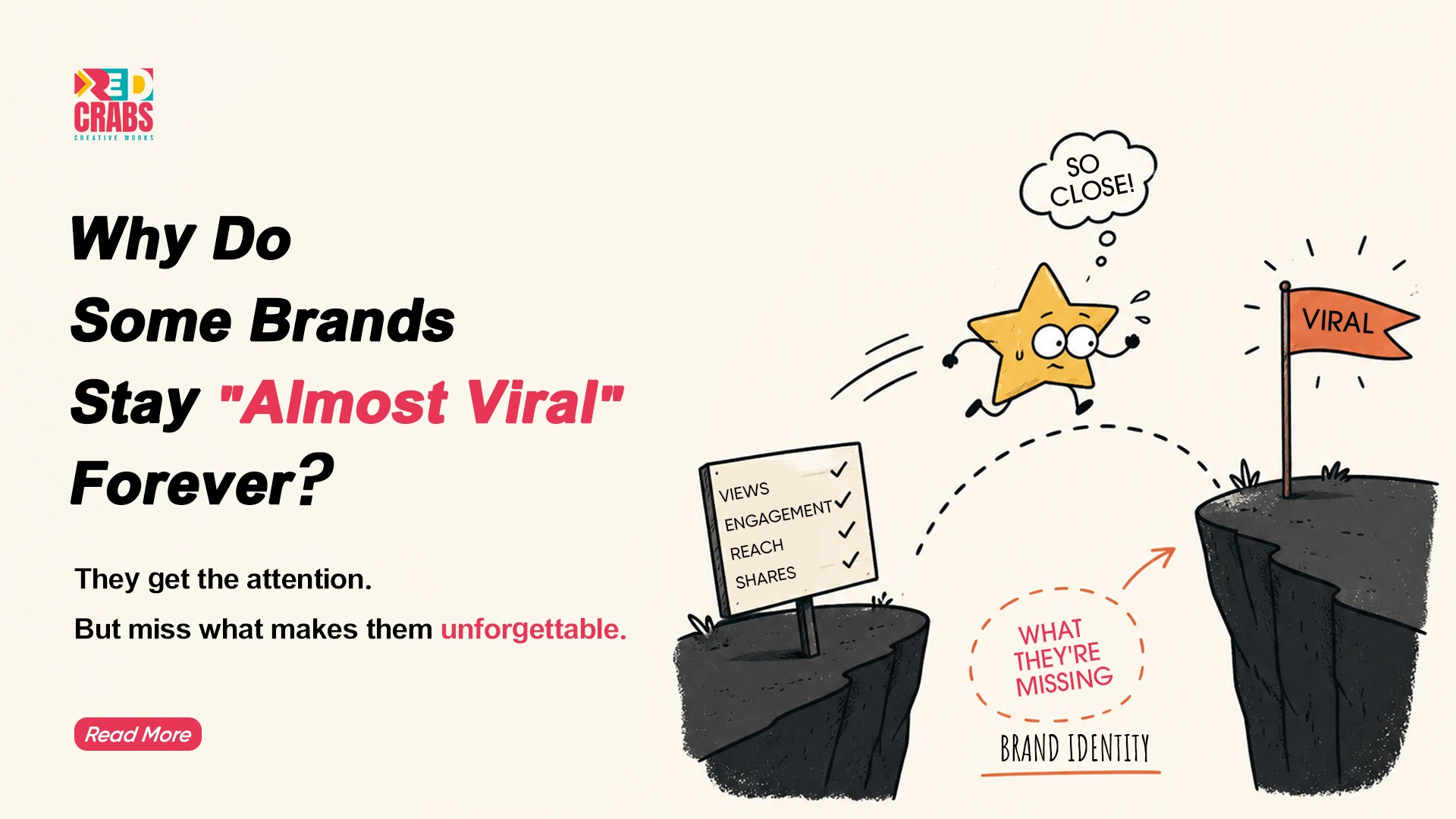
A brand can have an exceptional website and still struggle to build trust. It can have beautifully designed campaigns and still fail to create loyalty. It can attract attention through influencer partnerships, generate impressive engagement metrics, and remain largely forgettable when customers are finally ready to make a purchasing decision.
The reason is simple. Customers do not make decisions based solely on what they see. They make decisions based on what they believe.
Every interaction with a brand creates an impression. The language used in communication, the quality of customer service, the consistency of messaging, the credibility of recommendations, the experience of using a product or service, and even the people associated with the brand all contribute to a larger perception. Over time, that perception becomes one of the most valuable assets a business can build.
At RedCrabs, we often see businesses focusing intensely on visibility while unknowingly neglecting perception. The irony is that perception is often what determines whether visibility translates into revenue, loyalty, and long-term growth.
The Most Valuable Brands Win in the Mind Before They Win in the Market
Many businesses assume that competition is primarily about products, pricing, or features. While those factors certainly matter, they are rarely the sole reason customers choose one brand over another.
Think about industries where products are remarkably similar. Premium hotels offer comfortable rooms. Most smartphones perform similar functions. Many fashion brands source comparable materials. Yet some brands consistently command higher prices, stronger loyalty, and greater demand.
The difference often lies in perception.
Consumers assign value based on what a brand represents, not just what it sells. They are evaluating credibility, expertise, reliability, exclusivity, aspiration, and trust. These factors influence whether a customer views a purchase as an expense or an investment.
This is one of the foundations of Perceived value marketing. Businesses frequently focus on communicating features, but customers are often evaluating meaning. The strongest brands create confidence long before a transaction takes place.
Research from Harvard Business Review has shown that emotionally connected customers are significantly more valuable than highly satisfied customers because emotional connection influences loyalty, advocacy, and long-term engagement far more deeply than transactional satisfaction alone.
This explains why branding cannot simply be treated as a visual discipline. It is a behavioural discipline. It influences how people think, feel, and ultimately decide.
Temporary Reach Creates Attention. Lasting Influence Creates Demand.
One of the most common challenges facing brands today is the obsession with visibility metrics.
Campaign reports are often filled with impressions, views, engagement rates, reach statistics, and follower growth numbers. While these metrics can provide useful insights, they can also create a false sense of success when viewed in isolation.
A campaign that reaches one million people may appear successful on paper, but if it fails to improve perception, generate trust, or attract qualified customers, its long-term value becomes questionable.
This distinction between attention and influence is becoming increasingly important.
Attention is relatively easy to acquire. Paid advertising can generate it. Viral content can generate it. Influencer collaborations can generate it.
Influence is considerably harder.
Influence occurs when a brand shapes how customers think about a category, influences purchasing decisions, and becomes associated with specific qualities or experiences.
Brands focused solely on visibility often ask questions such as:
- How many people saw the campaign?
- How many views did the content receive?
- How much engagement was generated?
Brands focused on influence ask a different set of questions:
- Did people remember the brand?
- Did trust improve?
- Did consideration increase?
- Did qualified demand grow?
- Did perception become stronger?
The second set of questions is significantly more valuable because it focuses on outcomes rather than exposure.
A creator partnership that generates fewer impressions but attracts highly relevant customers often creates far greater business value than a campaign designed purely for scale.
Why Wrong Creator Selection Can Quietly Damage Brand Value
Influencer marketing continues to grow because consumers place tremendous value on recommendations from people they trust. However, one of the most expensive mistakes brands make is assuming that audience size automatically translates into influence.
In reality, creator selection is less about reach and more about alignment.
Every creator partnership sends a message to consumers. It communicates who the brand is, who it serves, and what it represents. Customers rarely separate the creator from the brand. Instead, they interpret the partnership as part of the overall brand story.
Imagine a luxury hospitality brand partnering with a creator known primarily for discount travel content. The creator may have a large audience, impressive engagement, and strong content performance. However, the partnership creates a contradiction. The audience associates the creator with affordability while the brand seeks to communicate exclusivity.
The campaign may perform well from a visibility perspective while simultaneously weakening brand positioning.
This is particularly important when building Premium Brand Positioning because premium brands depend heavily on consistency. Every touchpoint should reinforce the same perception. Every partnership should strengthen the narrative rather than complicate it.
The strongest creator partnerships typically share several characteristics:
What Effective Creator Partnerships Have in Common
- The audience aligns closely with the brand’s ideal customer profile.
- The creator’s values complement the brand’s positioning.
- The recommendation feels authentic rather than transactional.
- The partnership supports long-term perception rather than short-term visibility.
When these conditions are present, influencer marketing becomes far more than a distribution channel. It becomes a powerful brand-building tool.
The Psychology Behind Trust Transfer
One of the reasons influencer marketing can be so effective is because of a concept known as trust transfer.
Trust transfer occurs when credibility established in one relationship influences another. When audiences trust a creator, they may become more receptive to products, services, or brands recommended by that creator.
However, trust transfer is not automatic.
Many businesses mistakenly assume that simply paying for exposure will generate trust. The reality is considerably more nuanced.
Trust only transfers when three factors align:
- The audience genuinely trusts the creator.
- The recommendation feels relevant.
- The partnership appears authentic.
If any of these factors are missing, the effectiveness of the endorsement decreases significantly.
Research from Nielsen consistently demonstrates that recommendations from trusted individuals remain among the most influential sources of information for consumers worldwide.
What makes this particularly important for brands is that trust is contextual. A creator may be highly trusted within one category while having little authority in another. A technology reviewer may influence purchasing decisions related to gadgets but have minimal impact when discussing luxury travel or wellness services.
The strongest brands understand this dynamic and focus on credibility rather than simply exposure.
Luxury Branding Strategy Is About Meaning, Not Appearance
One of the biggest misconceptions surrounding Luxury Branding Strategy is the belief that luxury is primarily visual.
Premium packaging, sophisticated design, and high-quality photography are certainly important, but they are not what creates luxury in the minds of consumers.
Luxury is fundamentally psychological.
The world’s most successful luxury brands create value by attaching meaning to ownership. They transform products into symbols of achievement, aspiration, identity, craftsmanship, exclusivity, and confidence.
Customers are rarely paying premium prices solely because of functionality. They are paying for what the brand represents.
This is why two products with similar specifications can command dramatically different prices. The physical product matters, but the perceived value surrounding it often matters more.
Research from Bain & Company continues to highlight the role emotional desirability plays in luxury purchasing decisions, demonstrating that premium brands succeed because they create strong emotional and symbolic value beyond product performance.
The strongest premium brands consistently focus on:
What Premium Brands Build Better Than Competitors
Emotional Connection
They create experiences that customers remember and associate with positive feelings.
Clear Positioning
Customers understand exactly what the brand stands for and who it serves.
Consistency
Every interaction reinforces the same perception.
Distinctiveness
The brand occupies a unique space within the customer’s mind.
These elements contribute far more to premium perception than aesthetics alone.
Why Premium Customer Experience Matters More Than Ever
Modern consumers rarely interact with brands through a single touchpoint.
They may discover a business through social media, research it through search engines, visit its website, watch creator content, read reviews, compare alternatives, and interact with customer support before making a purchase.
Every one of these moments contributes to perception.
This is why Premium customer experience has become one of the most powerful competitive advantages available to businesses today.
A premium experience is not necessarily about offering more features or more services. It is about reducing friction and increasing confidence.
Customers should feel reassured at every stage of the journey.
Some of the strongest premium experiences are built through simple principles:
- Clear and consistent communication.
- Thoughtfully designed customer journeys.
- Reliable delivery of promises.
- Fast and responsive support.
- Seamless digital experiences.
What customers remember is not every detail. They remember the overall feeling those details create.
When that feeling is positive, trust deepens. When trust deepens, loyalty follows.
Measuring ROI Beyond Likes and Views
One of the reasons brands struggle to evaluate influencer partnerships effectively is because they often measure what is easiest rather than what is most important.
Views, impressions, and engagement metrics provide useful indicators of visibility, but they rarely reveal whether a campaign influenced perception or behaviour.
A more meaningful approach to ROI measurement considers broader indicators.
A Better Framework for Measuring Influencer Success
Brand Recall
Can consumers remember the brand after seeing the campaign?
Sentiment Shift
Has perception improved among the target audience?
Qualified Traffic
Are the right people visiting the website?
Search Demand
Has interest in the brand increased following the campaign?
Customer Lifetime Value
Are acquired customers generating long-term value?
According to McKinsey, businesses that focus on creating stronger and more personalised customer experiences often outperform competitors in customer acquisition, retention, and revenue growth.
These metrics provide a far clearer understanding of influence than visibility alone.
The Brands That Win Are the Ones That Create Belief
As markets become increasingly crowded, the brands that succeed will not necessarily be those with the biggest budgets or the most aggressive advertising strategies.
They will be the brands that create stronger belief.
Belief that the product is worth the investment.
Belief that the experience will justify the price.
Belief that the recommendation is trustworthy.
Belief that the brand understands its audience.
Ultimately, customers do not choose brands because they have seen them. They choose brands because they trust them.
That trust is built through positioning, consistency, relevance, experience, and perception. It is strengthened through thoughtful partnerships, meaningful storytelling, and experiences that reinforce credibility at every stage of the customer journey.
At RedCrabs, we have worked with businesses that initially believed they had a visibility problem when, in reality, they had a perception problem. The challenge was not getting more attention. The challenge was creating the kind of trust, relevance, and emotional connection that transforms attention into preference.
Because while design creates first impressions, perception creates lasting value.
And in a world where customers have endless choices, lasting value is what ultimately determines who gets chosen.
If your brand looks premium but isn’t creating the influence, trust, and customer preference it deserves, it may be time to focus on how your brand feels, not just how it looks. Explore how RedCrabs helps businesses strengthen their Luxury Branding Strategy, refine Premium Brand Positioning, leverage Perceived value marketing, and create a truly impactful Premium customer experience that drives long-term growth.