


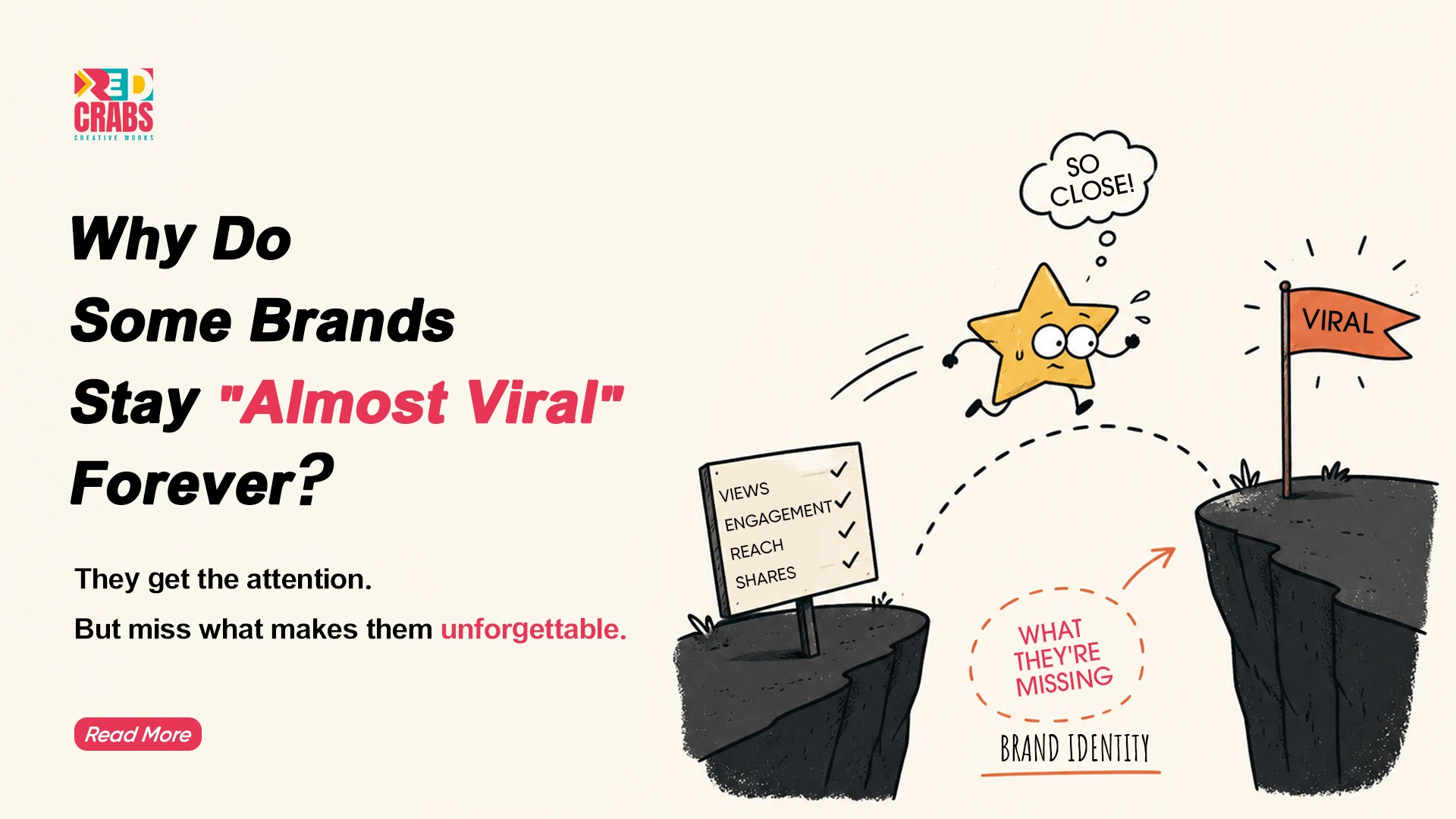


There was a time when brands knew exactly who they were competing with, because the landscape was structured and predictable. Competition meant looking at similar brands, comparing products, pricing, and positioning, and then responding accordingly.
That clarity no longer exists in the same way.
Today, your brand is not just competing with other brands, but with everything your audience encounters while scrolling through their feed. This includes content that was never meant to compete with you, such as memes, creators, short videos, and moments that feel more engaging simply because they are easier to consume.
That is the real competition now, and most brands are still not looking at it that way.
The Shift Most Brands Miss in Digital Competition Analysis
Most brands continue to approach competition as if it still exists within clearly defined categories. They analyse what others in their space are doing and try to improve on it, assuming that better execution within the same framework will lead to better results.
However, the audience is not experiencing your brand inside a category. They are experiencing it inside a feed.
In that environment, your content does not arrive with context. It appears between two completely unrelated pieces of content and is judged instantly. The comparison is not logical, but instinctive.
This is where digital competition analysis often becomes incomplete, because it focuses on identifying competitors while the audience responds to contrast.
People are not asking whether your brand is better than another. They are deciding whether it is worth their attention in that moment.
Why “Good Content” Quietly Disappears
One of the more difficult truths in digital marketing is that good content often goes unnoticed. This does not happen because the content lacks quality, but because it does not create a strong enough reason to stay.
Many brands invest in getting things right. Their visuals are clean, their messaging is clear, and their execution is polished. Yet, the outcome often feels underwhelming.
What is missing is not effort, but tension.
Content that performs well usually creates a moment of curiosity, recognition, or emotional response. Without that, even well-crafted content blends into the background.
This becomes more critical when you consider how little time people spend on each piece of content. Attention spans have reduced significantly, which means that content is judged within seconds rather than understood in detail, as highlighted in research by (Microsoft).
What the Feed Actually Responds To
The feed does not reward correctness. It responds to content that feels something.
This feeling can take different forms. It could be familiarity, where the content feels instantly recognisable. It could be contrast, where it interrupts the scroll just enough to hold attention. It could also be clarity, where the message is understood without effort.
What matters is not how much is being said, but how quickly it is experienced.
This is where positioning begins to operate differently. It is no longer limited to how a brand is described. It becomes about how a brand is perceived in motion.
The Question That Changes Everything
Most brands operate with a mindset focused on maintaining output, which leads them to ask what they should post next. While this keeps content moving, it does not necessarily improve how the brand is understood.
A more useful question is often overlooked.
Why should someone stop for this?
This shift changes the nature of content itself. It moves the focus from activity to intention, and from saying more to saying something that matters.
What Changes When This Becomes Clear
Once brands understand that they are competing with everything in the feed, their approach begins to change.
They become less focused on doing more and more focused on doing things in a way that feels consistent over time. Instead of constantly experimenting, they begin building patterns that audiences can recognise.
This shift is not always visible immediately, but it is felt.
Content starts to feel less scattered and more connected, and the brand becomes easier to understand without needing explanation.
At RedCrabs, this shift often begins with clarity before execution, because once the direction is well defined, content naturally starts aligning instead of competing within itself. You can explore this approach further at (RedCrabs).
Where Most Brands Lose Direction
There is a tendency to equate activity with progress, especially in digital spaces where visibility is easy to measure.
As a result, brands post more frequently, experiment with formats, and follow trends in the hope that something will work.
What often happens instead is fragmentation.
Over time, the brand starts to feel inconsistent, not because the content is poor, but because it does not point in a single direction. Each piece may work individually, but together they fail to build anything meaningful.
In a space where attention is limited, inconsistency becomes more damaging than invisibility.
The Role of a Digital Marketing Company Today
In this context, the role of a digital marketing company has changed in a fundamental way.
It is no longer limited to creating and distributing content. It now involves understanding how people experience content, how they make quick decisions, and how certain brands become easier to recognise over time.
Consistency plays a central role in this. Research suggests that consistent brand presentation can have a measurable impact on revenue, highlighting how alignment across touchpoints shapes perception in the long run, as shown in findings by (Lucidpress).
When viewed this way, strategy becomes less about planning what to post and more about ensuring that everything being communicated feels connected. This is often where the real difference begins to show.
How Strategy Begins to Matter Differently
Strategy is often misunderstood as a planning exercise, but in practice, it acts as a filter.
It helps decide what deserves to be said and what can be left out. It ensures that communication remains aligned even as formats and platforms change.
Without this, content becomes reactive, shaped more by trends than by intention.
Over time, this makes it harder for audiences to form a clear memory of the brand.
Insights around content performance continue to reinforce this, showing that consistency and clarity tend to outperform scattered efforts, especially in environments where attention is limited, as supported by data from (HubSpot).
Final Thought
Your brand is no longer being evaluated in isolation.
It is being experienced in passing, in between things that are often more entertaining, more relatable, or simply easier to consume.
In that moment, there is no time to explain.
Only time to be understood.
So the question becomes simple.
When your content appears, does it feel like it belongs there, or does it quietly get replaced?
If you are rethinking how your brand shows up in these moments, it is worth exploring approaches that focus less on output and more on clarity and alignment at RedCrabs Creative Works.