


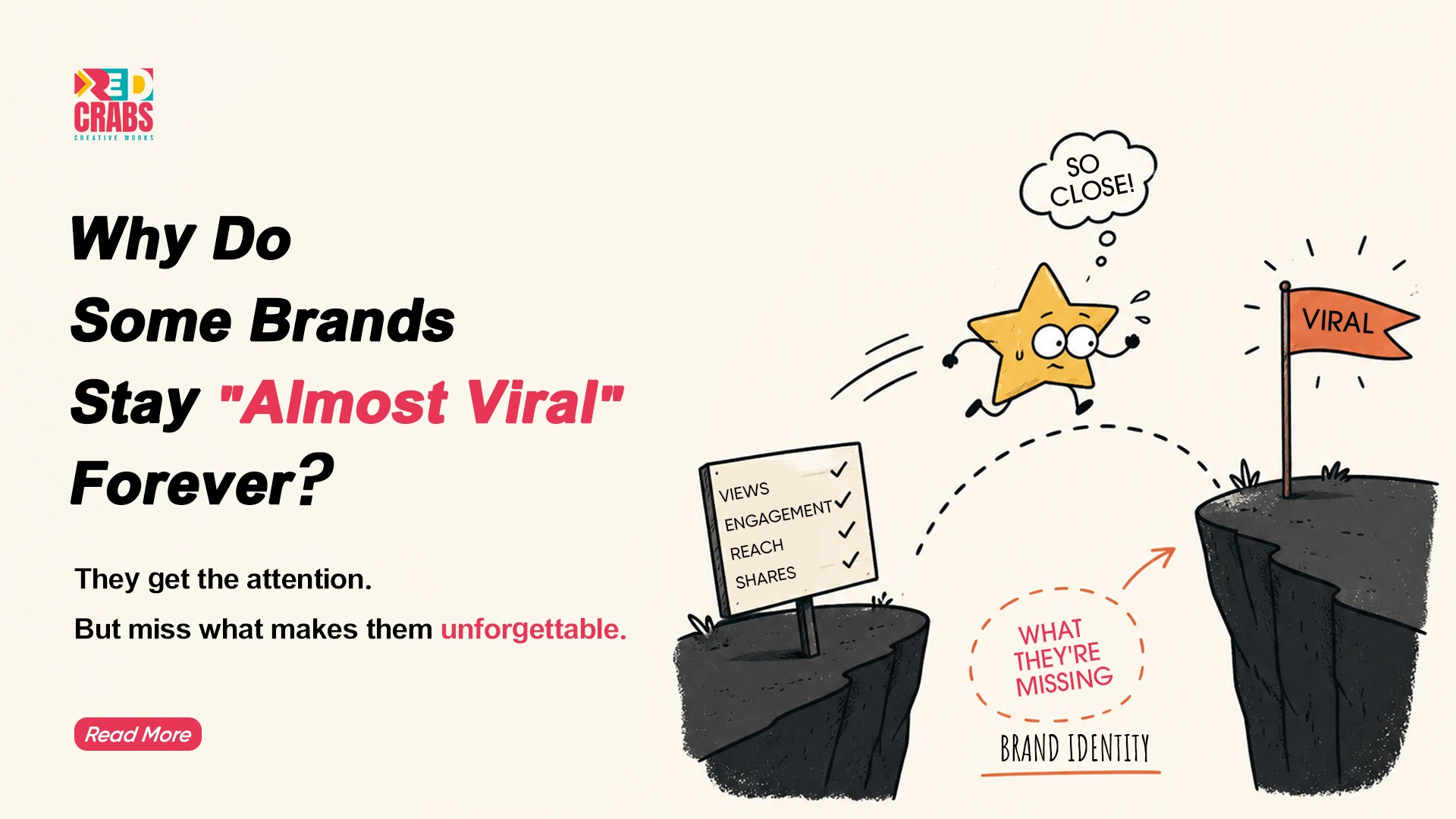
Most brands are not struggling because they are inactive.
They are struggling because nothing they do is building.
Content goes out.
It performs for a moment.
Then it disappears.
And the next post starts from zero again.
No continuity.
No memory.
No compounding.
At first, this feels like a reach problem. Or maybe a creativity problem. But if you look closely, it is neither.
It is a structure problem.
Because social media today is not about posting consistently. It is about creating something people recognize, trust, and return to.
The Difference Between Showing Up and Being Chosen
There is a subtle but powerful difference between content people see and content people seek.
You scroll past hundreds of posts every day. Most of them blur together. But a few stand out. And an even smaller number stay in your mind.
Those are the accounts you go back to.
Not because they are posting more.
But because they feel consistent.
You know their tone.
You understand their structure.
You trust the outcome.
That feeling of predictability is not boring. It is what builds habit.
And habit is what drives growth.
Where Most Brands Lose the Plot
If you audit most brand pages today, a pattern becomes obvious.
The content is not bad. It is just disconnected.
- One post tries to educate
- Another follows a trend
- The next is a promotional update
- Then something completely different
Each post may work individually. But together, they do not create a cohesive experience.
There is no pattern for the brain to recognize.
No consistency in delivery.
No reason to remember.
And when there is no memory, there is no return.
This is where content productization becomes important. It replaces randomness with structure and intention.
The Shift That Changes Everything
Most brands operate with a simple question:
“What should we post today?”
But brands that grow consistently ask a different question:
“What do people come back to us for?”
This shift forces clarity.
It moves your thinking from content creation to experience design.
And that is where a real social media content strategy begins. Not with a calendar, but with a system.
Why Familiarity Works Better Than Constant Reinvention
There is a common misconception that content needs to be new all the time.
In reality, it needs to be recognizable.
People process familiar patterns faster. They engage more when they do not have to think too much. According to (Nielsen), users prefer recognition over recall when interacting with information.
This has a direct impact on content performance.
When your format is consistent:
- Users instantly understand how to consume it
- They anticipate the value
- They engage with less effort
But when your format keeps changing, every post feels like a new learning curve.
And most people will not invest that effort while scrolling.
What It Actually Means to Treat Content Like a Product
This is where things move from theory to execution.
Treating content like a product is not about doing more. It is about doing things deliberately.
A clear and consistent value
Your audience should not have to guess what they will get from you.
Whether it is insights, breakdowns, or storytelling, the outcome should feel consistent across posts. This builds trust over time.
Structured, repeatable formats
Instead of reinventing content every time, you build formats that can be reused.
For example:
- A simple breakdown format that explains one idea clearly
- A storytelling format that shares real experiences
- A quick insight format that delivers value in seconds
The topic may change, but the structure remains stable.
That stability is what creates recognition.
Content that is easy to consume
Clarity matters more than complexity.
If your audience has to think too much to understand your content, they will move on. Structured formats reduce effort, and lower effort increases engagement.
Built-in reasons to return
This is where most brands fall short.
They create content for a moment, not for continuity.
But when you build:
- Ongoing themes
- Series-based content
- Recognizable storytelling styles
You give people a reason to come back.
And that is where a true social media growth strategy starts working.
What the Data Quietly Tells Us
User behavior already reflects this shift.
People are spending more time than ever on social media, with average daily usage crossing two hours (Statista).
But at the same time, only a small percentage of content receives meaningful engagement (DataReportal).
This gap exists because most content is not designed for retention.
It is designed for visibility.
And visibility alone does not create growth.
Consistency, on the other hand, has measurable impact. Research shows that consistent brand presentation can increase revenue by up to 23 percent (Lucidpress).
Because consistency builds familiarity.
Familiarity builds trust.
And trust drives decisions.
Why Execution Still Fails for Most Brands
Even with the right understanding, many brands struggle to implement this.
The reasons are usually simple:
- Too much focus on trends instead of systems
- Constantly changing styles
- Trying to say too many things at once
- Lack of a defined content structure
Even when working with an online marketing agency, this gap can remain if the focus is only on posting and not on building a system.
Without structure, content remains inconsistent.
And inconsistency prevents compounding.
What Changes When You Get This Right
When you start treating social media like a product, the shift is noticeable.
Content creation becomes more efficient.
Decisions become clearer.
Your brand starts to feel more cohesive.
But the biggest change is in how your audience behaves.
They begin to recognize your content instantly.
They engage more consistently.
They start coming back intentionally.
And that is when growth stops feeling random.
A Simple Way to Evaluate Your Content
If you want to assess where you stand, ask yourself:
- Does your content feel connected across posts
- Can someone recognize your content without your logo
- Do people know what to expect from you
If the answer is no, the issue is not effort.
It is structure.
Final Thought
Social media is no longer just a place to be present.
It is a place where people decide what is worth remembering.
And people do not remember randomness.
They remember clarity.
They remember patterns.
They remember consistency over time.
That is what turns content into something more.
That is what turns a page into a product.
If You Want to Build This Properly
If your current content feels inconsistent or difficult to scale, it may be time to rethink how it is structured.
You can explore how a well-defined social media content strategy is built or simply get in touch to understand how this approach can work for your brand.
Because growth today is not about doing more.
It is about building something people choose to come back to.